
When I first heard the word virtualization, it sounded like something out of science fiction. Imagine your computer running not just one, but multiple operating systems and applications—Windows, Linux, or even macOS—all on the same machine. That’s the magic of virtualization in computing.
Instead of dual-booting and restarting your PC every time you need a different OS, virtualization lets you run multiple instances side by side, saving time and improving flexibility.
In this article, we’ll break down what virtualization is, its benefits, downsides, types, and some of the best software you can use.
Table of Contents
What is Virtualization?
Virtualization is the ability to run multiple virtual instances on a single physical machine. Each virtual instance behaves like an independent computer, complete with its own operating system.
For example, if you primarily use Windows but occasionally need Linux for specific applications, you don’t need to dual boot. You can simply open a virtualization tool like VirtualBox and run Linux alongside Windows seamlessly.
Benefits of Virtualization
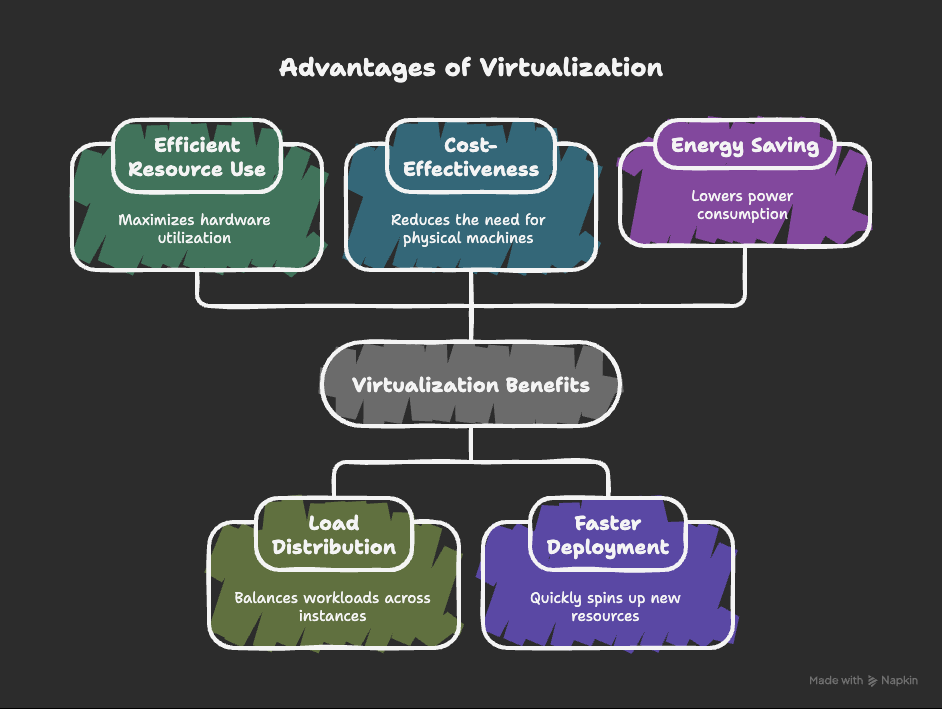
- Efficient resource use → Maximizes hardware utilization.
- Load distribution → Helps balance workloads across virtual instances.
- Cost-effective → Reduces the need for multiple physical machines.
- Faster deployment → New resources and systems can be spun up quickly.
- Energy saving → Fewer machines mean lower power consumption.
Downsides of Virtualization
- Scalability issues → Virtual machines may not scale as well as dedicated systems.
- Security risks → Multiple instances on one machine increase the attack surface.
Types of Virtualization
1. Desktop Virtualization
Lets you run desktop environments on a host machine using hypervisors. Perfect for testing and flexibility.
2. Application Virtualization
Applications run on a server and can be accessed by multiple users. Example: email applications hosted centrally for an organization.
3. Network Virtualization
Admins create virtual networks on top of physical infrastructure. For example, separate networks for finance and development teams on the same hardware.
4. Storage Virtualization
Combines storage from multiple devices into a single pool, then allocates it efficiently across departments. This avoids waste and ensures fair distribution of resources.
Best Software for Virtualization
- VMware Workstation Player (Paid) – Powerful, enterprise-ready solution.
- VirtualBox (Free) – Popular open-source option by Oracle.
- Parallels Desktop (Paid) – Great for running Windows on macOS.
- Citrix Hypervisor (Paid) – Business-focused virtualization platform.
- Microsoft Hyper-V (Paid) – Integrated with Windows for professional use.
FAQs about Virtualization in Computing
Virtualization allows you to run multiple operating systems or applications on a single computer.
Not exactly. Virtualization is the foundation that cloud computing uses to deliver scalable services.
Cost savings, better resource utilization, flexibility, and faster deployment of systems.
Yes, if your system doesn’t have enough resources (CPU, RAM, storage), performance can be affected.
VirtualBox and VMware Workstation are among the most widely used.
Conclusion
Virtualization in computing has revolutionized how we use and manage IT resources. It allows us to run multiple operating systems and applications on a single machine, saving both time and money.
From desktop and application virtualization to network and storage virtualization, the possibilities are vast. While it does come with some downsides like scalability limits and security risks, the benefits far outweigh the challenges.
In short: virtualization makes IT systems more flexible, efficient, and cost-effective.